

To become an HVAC technician in Florida, start by earning a high school diploma or GED, complete quality HVAC training, obtain EPA Section 608 certification if your work involves regulated refrigerants, and gain practical field experience. You can then pursue employment as an entry-level HVAC technician or continue building experience toward contractor licensing. The exact licensing requirements depend on the type of work and license you plan to pursue.
Key Facts
- HVAC technicians work on heating, ventilation, air conditioning, refrigeration, and climate-control equipment.
- Professional HVAC training can help you develop electrical, refrigeration, troubleshooting, installation, and maintenance skills.
- EPA Section 608 certification is required for technicians who perform covered work that could release regulated refrigerants.
- EPA Section 608 offers Type I, Type II, Type III, and Universal certifications; Universal covers all equipment types.
- Becoming an HVAC technician is different from becoming a licensed HVAC contractor in Florida.
- Florida’s Department of Business and Professional Regulation (DBPR) administers contractor licensing, including certified and registered air-conditioning contractor licenses.
- HVAC Academy in Orlando provides classroom instruction, hands-on lab training, EPA 608 preparation and testing, career-readiness support, and additional certification options.
What Does It Mean to Become an HVAC Technician in Florida?
An HVAC technician is a skilled trades professional who installs, maintains, diagnoses, repairs, and services heating, ventilation, air conditioning, and refrigeration equipment.
In Florida, HVAC work is especially relevant because homes and businesses depend heavily on air conditioning throughout much of the year. Technicians may work in residential homes, commercial buildings, restaurants, hotels, hospitals, schools, offices, industrial facilities, and other properties.
However, one important distinction is often misunderstood:
You do not need to become a licensed HVAC contractor simply to begin building a career as an HVAC technician.
A technician can enter the trade through education, certification, supervised experience, and employment. Contractor licensing becomes relevant when pursuing the authority and responsibility associated with contracting work.
Understanding that difference can make the career path much easier to navigate.
How to Become an HVAC Technician in Florida
Step 1: Earn a High School Diploma or GED
A high school diploma or GED is a practical starting point for an HVAC career.
HVAC is a technical trade, so a strong foundation in basic math, reading, problem-solving, and science can make training easier.
You do not need a four-year college degree to start learning the HVAC trade.
Useful subjects include:
- Mathematics
- Basic physics
- Electrical fundamentals
- Computer skills
- Technical education
- Mechanical systems
If you’re still in school, vocational or technical classes can also provide useful exposure to skilled trades.
For adults changing careers, a GED can provide an alternative path if you did not complete high school.
Step 2: Choose an HVAC Training Program
The next step is learning the fundamentals of the trade.
While there are different ways to enter HVAC, structured training can help you develop foundational knowledge before working independently in the field.
A comprehensive HVAC program should teach more than how to recognize common air-conditioning components.
Look for training that covers:
- HVAC system fundamentals
- Electrical components
- Refrigeration principles
- Air conditioning systems
- Heating systems
- System diagnostics
- Troubleshooting
- Preventive maintenance
- Installation fundamentals
- Tools and instruments
- Safety procedures
- Refrigerant handling
- Customer-service fundamentals
Hands-on training is particularly valuable because HVAC is a practical trade.
Knowing the theory behind a system is important. Knowing how to safely diagnose a problem using actual tools is equally important.
Step 3: Learn Electrical and Refrigeration Fundamentals
Two areas deserve special attention during HVAC training: electrical systems and refrigeration.
Modern HVAC equipment combines mechanical components, electrical controls, sensors, motors, refrigerant circuits, and airflow systems.
A technician needs to understand how those components interact.
Electrical Skills
HVAC technicians may need to understand:
- Voltage
- Current
- Resistance
- Electrical circuits
- Capacitors
- Relays
- Contactors
- Motors
- Transformers
- Control boards
- Thermostats
- Electrical safety
These skills help technicians troubleshoot problems rather than simply replacing parts.
Refrigeration Skills
Refrigeration fundamentals help technicians understand:
- Refrigerant cycles
- Pressure and temperature relationships
- Compressors
- Condensers
- Evaporators
- Metering devices
- Superheat
- Subcooling
- Leak detection
- Refrigerant recovery
This knowledge becomes especially important when preparing for EPA Section 608 certification.
Step 4: Earn EPA Section 608 Certification
EPA Section 608 certification is an important credential for HVAC professionals who work with regulated refrigerants.
Under EPA rules, technicians who maintain, service, repair, or dispose of equipment that could release regulated refrigerants must be certified through an EPA-approved testing organization.
The EPA recognizes four certification categories:
| Certification | General Application |
|---|---|
| Type I | Small appliances |
| Type II | High- and very-high-pressure appliances, excluding small appliances and MVACs |
| Type III | Low-pressure appliances |
| Universal | All equipment types |
A Universal certification covers all three equipment categories and can be a useful credential for technicians who want broad refrigerant-handling qualifications.
EPA Section 608 credentials do not expire.
Does HVAC School Automatically Give You EPA Certification?
Not necessarily.
Training and certification are related but different.
A school can prepare students for an EPA exam, but the certification itself comes through an EPA-approved certifying organization after the required test is passed.
HVAC Academy’s current program includes EPA 608 study materials, EPA exam preparation, and the EPA 608 exam, with Universal certification available upon passing the exam.
Step 5: Get Hands-On Experience
Training provides a foundation. Field experience develops judgment.
After completing training, look for opportunities such as:
- Entry-level HVAC technician positions
- HVAC helper positions
- Installation positions
- Maintenance positions
- Apprenticeships
- Service trainee positions
- Supervised field work
Working alongside experienced technicians exposes you to situations that cannot always be reproduced in a classroom.
You may encounter systems with:
- Intermittent electrical problems
- Poor airflow
- Refrigerant issues
- Dirty coils
- Failed motors
- Faulty controls
- Thermostat problems
- Drainage issues
- Improper installation
- Aging equipment
The goal is not simply to accumulate hours. It’s to develop the ability to diagnose problems methodically and safely.
Step 6: Build a Strong HVAC Toolset
You don’t necessarily need to purchase every professional HVAC tool on your first day.
Start with the equipment required for your training or employer and gradually expand your toolset as your skills develop.
Common HVAC tools include:
- Multimeter
- Manifold or digital gauges
- Temperature measurement tools
- Screwdrivers
- Nut drivers
- Pliers
- Wrenches
- Hand tools
- Electrical testing equipment
- Safety equipment
HVAC Academy’s current Basic training tier includes manifold gauges and a Fieldpiece meter, giving students exposure to tools used in field work.
Step 7: Apply for Entry-Level HVAC Jobs
Once you have training and the appropriate credentials, you can begin applying for HVAC positions.
Potential entry-level roles include:
HVAC Helper
Helpers support experienced technicians with tools, materials, equipment, installation, maintenance, and job-site tasks.
HVAC Installer
Installers focus on installing equipment, components, ductwork, controls, and related systems.
Maintenance Technician
Maintenance-focused technicians perform inspections, preventive maintenance, basic troubleshooting, and equipment service.
Entry-Level Service Technician
Service technicians diagnose and repair HVAC equipment. Employers may expect different levels of experience depending on the position.
A good first job should provide opportunities to continue learning.
Step 8: Continue Building Your Skills
HVAC technology changes continuously.
Technicians increasingly encounter:
- Variable-speed equipment
- Heat pumps
- Smart controls
- Electronic thermostats
- Advanced diagnostics
- New refrigerants
- High-efficiency systems
- Connected HVAC equipment
- More sophisticated control systems
Continuing education can help technicians remain competitive.
Additional certifications can also support career development.
HVAC Academy currently offers additional certification options through its Advanced and Premium training tiers, including HVAC Excellence certification and NATE Ready-to-Work certification.
HVAC Technician vs. HVAC Contractor in Florida
This distinction is one of the most important things to understand before starting an HVAC career.
An HVAC technician generally works for an HVAC company or contractor performing technical work within the scope of the job and applicable supervision and legal requirements.
An HVAC contractor has a different level of responsibility and licensing.
Florida’s DBPR recognizes certified and registered air-conditioning contractor licenses, including Class A and Class B categories.
A certified contractor license allows contracting statewide, while a registered contractor’s authority is tied to the jurisdiction in which the registration is held.
For example, Florida defines a Class A air-conditioning contractor as having an unlimited scope for specified central air-conditioning, refrigeration, heating, and ventilating systems, while Class B is limited to systems of up to 25 tons of cooling and 500,000 BTU of heating in any one system.
The licensing process is substantially more involved than simply completing HVAC school.
What Are the Experience Requirements for a Florida HVAC Contractor License?
For certified contractor licensing, Florida DBPR states that applicants generally need four years of experience or a combination of college education and experience, along with other requirements.
The specific qualification method can vary by license category.
For example, the current Class A application describes several combinations of education and experience, including four years of worker or foreman experience, with at least one year as a foreman under that particular qualification method.
This is why someone interested in eventually becoming a contractor should think about HVAC training as the beginning of a career pathway, not the final licensing step.
How Long Does It Take to Become an HVAC Technician in Florida?
There isn’t one universal timeline.
Your timeline depends on:
- Previous education
- Training program
- Program schedule
- Certifications
- Employment opportunities
- Apprenticeship requirements
- Type of HVAC work
- Career goals
A focused HVAC training program can provide foundational knowledge relatively quickly, while becoming an experienced technician takes continued field practice.
It’s also important to separate three different milestones:
- Completing HVAC training
- Becoming employable as an entry-level technician
- Becoming qualified for advanced or contractor-level responsibilities
Those are not the same thing.
HVAC Academy describes its program as a fast-track career trade school and currently offers Monday-through-Thursday evening classes combining classroom instruction with hands-on lab training.
What Skills Do You Need to Become an HVAC Technician?
HVAC is both a technical and customer-facing career.
Important skills include:
Technical Skills
- Electrical troubleshooting
- Refrigeration fundamentals
- Airflow diagnostics
- Equipment installation
- Preventive maintenance
- Mechanical troubleshooting
- Reading technical information
- Safe tool use
Problem-Solving Skills
Good technicians don’t simply replace the first component that appears suspicious.
They develop a process:
- Understand the customer’s complaint.
- Inspect the equipment.
- Gather measurements.
- Identify possible causes.
- Test those possibilities.
- Determine the actual fault.
- Make the appropriate repair.
- Verify system operation.
Communication Skills
Technicians regularly interact with homeowners, property managers, business owners, coworkers, and supervisors.
Being able to explain a technical issue clearly is a valuable professional skill.
Where Can HVAC Technicians Work in Florida?
HVAC technicians can work in many environments.
Potential workplaces include:
- Residential homes
- Apartment communities
- Restaurants
- Retail stores
- Hotels
- Hospitals
- Schools
- Offices
- Warehouses
- Manufacturing facilities
- Airports
- Commercial buildings
Florida’s climate creates ongoing demand for air-conditioning installation, maintenance, troubleshooting, and replacement services.
HVAC Academy specifically highlights residential, commercial, and industrial environments among the settings where HVAC technicians can work.
Is HVAC a Good Career in Florida?
For people who enjoy hands-on work, troubleshooting, mechanical systems, and skilled trades, HVAC can provide a practical career path.
The work also offers room for specialization.
A technician might eventually focus on:
- Residential service
- Commercial HVAC
- Installation
- Refrigeration
- Preventive maintenance
- Controls
- Heat pumps
- Industrial systems
- System diagnostics
- Management
- Contracting
However, HVAC work is not for everyone.
Technicians may work in hot conditions, crawl spaces, attics, mechanical rooms, rooftops, and other physically demanding environments.
It’s important to understand the working conditions before choosing the trade.
Common Mistakes New HVAC Students Make
Mistake 1: Thinking Certification Alone Makes You an Experienced Technician
A certification demonstrates that you met a specific credential requirement.
It doesn’t replace hands-on experience.
Better approach: combine certification with practical training and supervised field experience.
Mistake 2: Confusing EPA 608 With a Florida Contractor License
EPA 608 concerns refrigerant handling requirements. Florida contractor licensing is a separate issue administered through DBPR.
Better approach: understand which credential applies to the work you want to perform.
Mistake 3: Learning Only Theory
HVAC is a practical trade.
Better approach: choose training that gives you opportunities to work with real equipment, tools, measurements, and troubleshooting scenarios.
Mistake 4: Buying Every Tool Immediately
A new student can spend a lot of money on tools that aren’t immediately necessary.
Better approach: start with the tools required for training and your first job, then build your collection as your career develops.
Mistake 5: Choosing a Program Based Only on Price
Tuition is important, but it’s only one factor.
Compare the complete training package, including hands-on instruction, certifications, career support, equipment, and field exposure.
Expert Tips for Starting an HVAC Career in Florida
1. Prioritize Hands-On Learning
The ability to diagnose a system is developed through practice.
Look for training where you can apply classroom concepts to actual equipment and troubleshooting exercises.
2. Understand Refrigerant Rules Early
EPA Section 608 is fundamental to many HVAC career paths. Learn the certification requirements before entering the field.
3. Don’t Rush the Diagnostic Process
Experienced technicians don’t guess when measurements can provide an answer.
Learn to use instruments correctly and understand what the measurements mean.
4. Find Experienced People to Learn From
Your first years in HVAC are an opportunity to develop professional habits.
Pay attention to how experienced technicians diagnose systems, communicate with customers, document work, and approach safety.
5. Think Beyond Your First Job
Your first HVAC position doesn’t have to be your final career destination.
Build skills that can eventually lead toward advanced technical roles, specialized work, supervision, or contractor licensing.
Frequently Asked Questions
1. Do you need a license to be an HVAC technician in Florida?
HVAC technician work and HVAC contractor licensing are different. Florida contractor licensing applies to contracting activities, while technicians may work for licensed contractors subject to applicable requirements. The exact requirements depend on the work being performed and the individual’s role.
2. Do HVAC technicians need EPA 608 certification in Florida?
Technicians who perform covered work involving regulated refrigerants must have EPA Section 608 certification. EPA requires certification for technicians who maintain, service, repair, or dispose of equipment that could release regulated refrigerants.
3. How long does it take to become an HVAC technician in Florida?
There is no single required timeline for becoming an entry-level HVAC technician. Training length varies by program, while developing advanced field skills takes additional experience.
4. Can I become an HVAC technician without a college degree?
Yes. HVAC is a skilled trade, and many people enter the field through vocational training, technical programs, apprenticeships, and on-the-job experience rather than a four-year college degree.
5. What is the best HVAC certification for beginners?
EPA Section 608 Universal certification can be valuable because it covers all major equipment categories recognized under the EPA certification system. The appropriate certification depends on the type of equipment you intend to work on.
Why Choose HVAC Academy in Orlando?
Choosing an HVAC school is an important career decision. The goal should be to find training that gives you useful technical knowledge, practical experience, and a realistic pathway into the industry.
HVAC Academy has operated since 2013, formerly under the name DMAC Tech, and describes itself as a fast-track career trade school focused on HVAC education. Its instructors have more than 30 years of HVAC industry experience and include professionals with Florida Air Conditioning Contractor licensing experience.
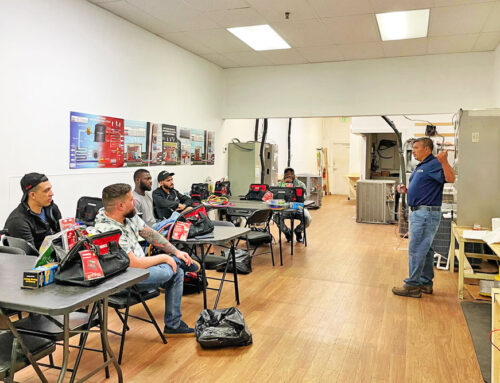
The school’s current HVAC Technician Training Program combines classroom instruction with hands-on laboratory training. Students can also receive EPA exam preparation and testing, with additional certification options available through different program tiers.
The program also includes career-readiness support. Depending on the selected tier and program offering, students can receive resume review, interview preparation, job-lead assistance, and continued technical support. HVAC Academy also describes a ride-along experience with a local HVAC company to provide exposure to real-world field conditions.
For students looking for HVAC training in Orlando and Central Florida, the academy’s location is at 3464 Avalon Park E Blvd, Orlando, FL 32828.
The important consideration isn’t simply choosing the shortest program. It’s choosing training that helps you understand the trade, develop practical skills, earn relevant credentials, and prepare for the next stage of your career.
Start Your HVAC Career in Florida
If you’re ready to explore a career in heating and air conditioning, the first step is learning what the trade actually requires.
You don’t need to figure out every stage of your career at once.
Start with the fundamentals:
Learn the trade → develop hands-on skills → earn the appropriate certifications → gain field experience → build your career.
HVAC Academy offers hands-on HVAC technician training in Orlando with EPA 608 preparation and testing, career-readiness support, and additional certification options.

Leave A Comment