

HVAC school teaches students the practical and technical skills needed to work with heating, ventilation, and air conditioning systems. Training typically covers HVAC fundamentals, electrical systems, refrigeration, troubleshooting, installation, maintenance, safety, tools, and industry practices. At HVAC Academy in Orlando, students receive classroom instruction combined with hands-on lab training, EPA 608 preparation, certification options, and career-readiness support.
Key Facts
- HVAC training combines classroom education with hands-on lab experience.
- Students learn how heating, ventilation, air conditioning, and refrigeration systems operate.
- Electrical troubleshooting and HVAC controls are important parts of technician training.
- Refrigeration principles and safe refrigerant handling are essential HVAC skills.
- Students practice using professional HVAC tools and diagnostic equipment.
- EPA 608 preparation is included in HVAC Academy’s program.
- HVAC technicians can work in homes, offices, restaurants, hospitals, hotels, schools, stores, factories, and other facilities.
What Do You Learn in HVAC School?
HVAC school prepares students for the technical, practical, and professional demands of working in the heating and cooling industry.
Rather than simply memorizing HVAC terminology, a quality training program should help students understand how HVAC systems work, how to diagnose problems, how to perform maintenance, and how to approach repairs safely.
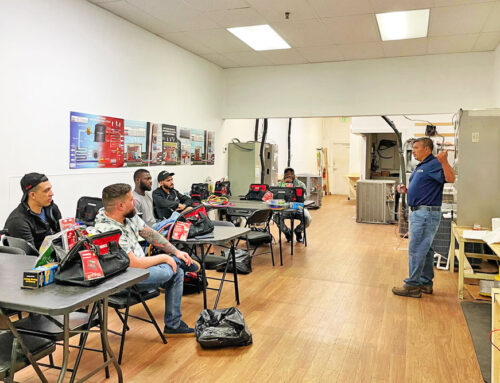
At HVAC Academy in Orlando, the training program combines classroom instruction and hands-on laboratory training. The program is designed for people entering the HVAC industry and includes HVAC fundamentals, EPA 608 preparation and testing, industry-recognized certification options, career-readiness support, and continued technical support for graduates.
1. HVAC Fundamentals
Every HVAC career starts with understanding the fundamentals.
Students learn the basic principles behind heating and cooling systems, including how components work together to control temperature and indoor comfort.
Fundamental topics can include:
- Heating and cooling principles
- Air movement
- Temperature measurement
- Pressure and airflow
- HVAC system components
- Basic refrigeration concepts
- Equipment operation
- System efficiency
- Preventive maintenance
This foundation is important because technicians need to understand why a system is behaving a certain way, not simply identify a component.
For example, if an air conditioner is not cooling properly, a technician needs to consider several possible causes rather than immediately replacing a part.
2. Electrical Systems and Troubleshooting
Electrical knowledge is one of the most important skills for an HVAC technician.
Modern HVAC equipment relies on electrical components to operate motors, compressors, fans, controls, thermostats, and other system parts.
HVAC students learn concepts such as:
- Voltage
- Current
- Resistance
- Electrical circuits
- Motors
- Capacitors
- Relays
- Contactors
- Transformers
- Fuses and breakers
- Electrical measurements
- Basic control circuits
Students also learn how diagnostic equipment can help identify electrical problems.
Why electrical training matters
An HVAC technician may encounter a system that will not start, a blower that does not operate, or a compressor that is not receiving the correct electrical signal.
Understanding electrical fundamentals helps technicians approach these problems systematically.
3. Refrigeration Principles
Refrigeration is at the heart of many air conditioning systems.
HVAC training introduces students to the refrigeration cycle and explains how refrigerant moves through major components to transfer heat.
Students may study components such as:
- Compressors
- Condensers
- Evaporators
- Expansion devices
- Refrigerant lines
- Filters and related components
Understanding the refrigeration cycle allows technicians to interpret system pressures, temperatures, and operating conditions.
This knowledge becomes especially important when diagnosing cooling problems.
4. Refrigerant Handling and EPA 608
Refrigerant handling is another important part of HVAC education.
HVAC Academy’s current training program includes EPA 608 study materials, the EPA 608 exam, and EPA 608 Universal Certification upon passing in its Basic Tier.
Students learn why refrigerants must be handled carefully and why technicians need to follow applicable environmental and safety requirements.
EPA 608 preparation can help students understand topics related to:
- Refrigerant handling
- Recovery practices
- Refrigerant safety
- Refrigeration equipment
- Environmental requirements
- Proper service procedures
For someone entering the HVAC industry, understanding refrigerant regulations is an important part of becoming job-ready.
5. HVAC Installation
HVAC school can also introduce students to the fundamentals of equipment installation.
Installation requires more than placing a new air conditioner or furnace into position. Technicians need to understand how equipment connects to the electrical system, ductwork, refrigerant circuit, controls, and other components.
Training can cover concepts related to:
- Equipment placement
- System connections
- Ductwork
- Refrigerant lines
- Electrical connections
- Thermostats and controls
- System startup
- Testing and commissioning
Hands-on practice is particularly useful because installation work involves physical equipment and real-world procedures.
6. HVAC Maintenance
Preventive maintenance helps HVAC systems operate reliably and can identify problems before they become larger failures.
Students learn why routine maintenance matters and how technicians approach equipment inspections.
Common maintenance-related tasks can include:
- Inspecting system components
- Checking electrical connections
- Evaluating airflow
- Cleaning appropriate components
- Checking operating conditions
- Inspecting filters
- Evaluating system performance
- Identifying signs of wear
The goal is to develop a methodical approach rather than simply reacting when equipment stops working.
7. HVAC Troubleshooting and Diagnostics
One of the most valuable skills students develop is the ability to troubleshoot.
A customer may tell a technician:
“My air conditioner is running, but the house isn’t getting cool.”
That description does not identify the actual problem.
The technician must investigate.
Possible causes could involve electrical components, airflow, controls, refrigerant-related issues, mechanical components, or other system conditions.
HVAC training teaches students to:
- Gather information.
- Inspect the equipment.
- Identify symptoms.
- Test relevant components.
- Interpret measurements.
- Determine the likely cause.
- Recommend an appropriate solution.
- Verify system operation.
This diagnostic mindset is one of the differences between simply knowing HVAC terminology and developing useful technician skills.
8. HVAC Tools and Diagnostic Equipment
Students also become familiar with tools used by HVAC professionals.
HVAC Academy’s current Basic Tier includes manifold gauges and a Fieldpiece meter, along with training and other program materials.
Depending on the training program and equipment, students may work with tools such as:
- Multimeters
- Manifold gauges
- Thermometers
- Electrical testers
- Hand tools
- Pressure measurement equipment
- Diagnostic instruments
Learning what each tool does is only part of the process.
Students also need to understand when and why to use a particular tool and how to interpret the information it provides.
9. Safety Practices
HVAC technicians work around electricity, moving equipment, pressurized systems, hot and cold surfaces, and other workplace hazards.
For that reason, safety should be part of technical training from the beginning.
Students should develop habits such as:
- Following equipment procedures
- Using appropriate personal protective equipment
- Understanding electrical hazards
- Securing equipment before service
- Using tools correctly
- Following manufacturer instructions
- Maintaining an organized work area
- Knowing when a situation requires additional expertise
Safety is not a separate skill that only matters during school. It is part of professional HVAC work.
10. Hands-On HVAC Training
One of the most important differences between reading about HVAC and learning HVAC is hands-on practice.
A textbook can explain how a compressor works. Hands-on training gives students the opportunity to work with equipment and understand how individual components fit into a functioning system.
HVAC Academy specifically describes its program as combining focused classroom instruction with hands-on lab training.
This practical experience can help students become more comfortable with:
- HVAC equipment
- Diagnostic tools
- Electrical components
- System components
- Troubleshooting procedures
- Technical terminology
- Professional work practices
11. Professional and Career Skills
HVAC technicians need more than technical knowledge.
They also interact with homeowners, property managers, contractors, business owners, coworkers, and other professionals.
Career preparation can therefore involve:
- Communication
- Professional conduct
- Problem-solving
- Customer service
- Interview preparation
- Resume development
- Job-search preparation
HVAC Academy includes job lead assistance, interview preparation, and resume review in its Basic Tier.
These skills can help students transition from the classroom toward employment.
12. Industry Certifications
Certifications can be another important part of HVAC training.
HVAC Academy’s program currently offers different training tiers with additional certification options. The Basic Tier includes EPA 608 preparation and testing, while the Advanced Tier adds HVAC Excellence Certification and the Premium Tier adds NATE Ready-to-Work Certification.
| Training Area | What Students Develop |
|---|---|
| HVAC Fundamentals | Understanding system operation |
| Electrical | Electrical concepts and diagnostics |
| Refrigeration | Understanding the refrigeration cycle |
| EPA 608 | Refrigerant-related knowledge |
| Installation | Equipment and system installation concepts |
| Maintenance | Inspection and preventive service skills |
| Troubleshooting | Systematic diagnostic thinking |
| Hands-On Training | Practical equipment experience |
| Career Preparation | Job and professional skills |
The exact certifications and requirements can vary by program and career path, so students should understand what each credential represents before choosing a training option.
What Can You Do After HVAC School?
Completing HVAC training can prepare students to pursue entry-level opportunities in several areas of the industry.
HVAC technicians can work in environments such as:
- Residential homes
- Commercial buildings
- Restaurants
- Hospitals
- Hotels
- Schools
- Offices
- Stores
- Factories
- Airports
HVAC Academy notes that technicians may specialize in maintenance, installation, or servicing and may work with residential, commercial, industrial, or multiple types of systems.
As experience develops, technicians may pursue additional certifications, specialized training, supervisory responsibilities, or other career opportunities.
HVAC School vs. Learning on the Job
Both classroom training and field experience have value, but they serve different purposes.
| HVAC School | Learning Only on the Job |
|---|---|
| Structured curriculum | Learning depends heavily on the employer |
| Dedicated instruction | Primarily field-based |
| Hands-on lab practice | Real customer equipment |
| Builds foundational knowledge | Builds practical experience |
| Exposure to multiple concepts | May focus on specific equipment |
| Certification preparation | Certification may require separate preparation |
| Career-readiness support may be included | Depends on employer |
For someone completely new to HVAC, structured training can provide a foundation before or alongside entry-level field experience.
How Long Does HVAC School Take?
The answer depends on the school and program.
Some HVAC education programs are designed as long-term programs, while others use accelerated formats.
HVAC Academy describes itself as a fast-track trade school and states that its program is designed to help students pursue their goals through a concise curriculum.
The current HVAC Technician Training Program runs Monday through Thursday from 5:00 PM to 7:30 PM and combines classroom instruction with hands-on laboratory training.
Students should compare program length based on more than the calendar. Look at:
- Hands-on training
- Curriculum
- Instructor experience
- Certifications
- Equipment
- Career support
- Schedule
- Total tuition
- Admission requirements
Common Mistakes When Choosing an HVAC School
1. Choosing Only Based on Price
The cheapest program is not automatically the best value.
Consider what is included in tuition, including hands-on training, certifications, tools, testing, and career support.
2. Ignoring Hands-On Training
HVAC is a practical trade. A program that provides opportunities to work with equipment can offer valuable preparation.
3. Not Asking About Certifications
Find out which certifications are included, which require additional fees, and what preparation is provided.
4. Overlooking Instructor Experience
Experienced instructors can provide practical context that goes beyond textbook explanations.
HVAC Academy states that its instructors have more than 30 years of HVAC industry experience and hold advanced industry credentials, including a Florida Air Conditioning Contractor’s License.
5. Failing to Consider Career Support
Training is only one part of starting an HVAC career. Resume assistance, interview preparation, and job leads can also be valuable.
Expert Tips for Choosing HVAC Training
Before enrolling, ask these questions:
- How much hands-on training is included?
- What certifications are included?
- Is EPA 608 preparation provided?
- What equipment will students use?
- Who teaches the classes?
- What is the class schedule?
- Are career services available?
- What is included in tuition?
- Are there additional testing or equipment fees?
- Does the curriculum match the type of HVAC work I want to pursue?
A good HVAC program should make its curriculum, schedule, costs, admissions process, and student support clear.
Why Choose HVAC Academy in Orlando?
HVAC Academy is focused specifically on HVAC education and career preparation.
The school states that it has operated since 2013, formerly under the name DMAC Tech, and focuses on concise vocational education designed to prepare students for careers in heating and air conditioning.
Its current program combines classroom instruction and hands-on lab training, EPA 608 preparation, certification options, career-readiness assistance, and continued technical support for graduates.
The school is located at 3464 Avalon Park E Blvd, Orlando, FL 32828, making it a local option for students seeking HVAC training in the Orlando area.
Most importantly, prospective students should choose training based on their own career goals, schedule, budget, and preferred learning style.
Frequently Asked Questions
What do you learn in HVAC school?
HVAC school teaches fundamentals of heating and cooling, electrical systems, refrigeration, installation, maintenance, troubleshooting, safety, tools, and professional practices.
Is HVAC school difficult?
HVAC training can be challenging because students need to understand technical concepts while also developing practical skills. Consistent practice and a willingness to learn can make the process more manageable.
Do HVAC schools provide hands-on training?
Many programs do. HVAC Academy’s current program combines classroom instruction with hands-on laboratory training.
Do you need EPA 608 certification to work in HVAC?
EPA Section 608 certification is important for technicians who work with regulated refrigerants. Students should understand the certification requirements that apply to the work they plan to perform.
Can I start HVAC training with no experience?
Many entry-level HVAC programs are designed for people entering the industry. HVAC Academy’s current training program specifically describes its classroom and lab schedule as being for individuals entering HVAC.
How long does HVAC training take?
Program length varies by school. Accelerated programs may use a more concentrated schedule, while other HVAC programs can take considerably longer.
Is HVAC a good career choice?
HVAC can provide career opportunities in residential, commercial, and industrial environments. Technicians can work in installation, maintenance, service, and related specialties.
What certifications can HVAC students earn?
Certification options vary. HVAC Academy currently offers EPA 608 Universal Certification upon passing in its Basic Tier, HVAC Excellence Certification in its Advanced Tier, and NATE Ready-to-Work Certification in its Premium Tier.
What tools do HVAC students use?
HVAC students may work with diagnostic and service tools such as multimeters, gauges, thermometers, electrical testers, and other equipment. HVAC Academy’s Basic Tier currently includes manifold gauges and a Fieldpiece meter.
Where can HVAC technicians work?
HVAC technicians can work in homes, offices, schools, restaurants, hotels, hospitals, factories, stores, airports, and other buildings that use climate-control equipment.
Start Building Your HVAC Career in Orlando
If you’re considering a career in heating and air conditioning, the right training can give you a stronger foundation before entering the field.
HVAC Academy provides classroom and hands-on HVAC technician training in Orlando, along with EPA 608 preparation, certification options, and career-readiness support.


Leave A Comment